Is Globalization Still Good for Health?
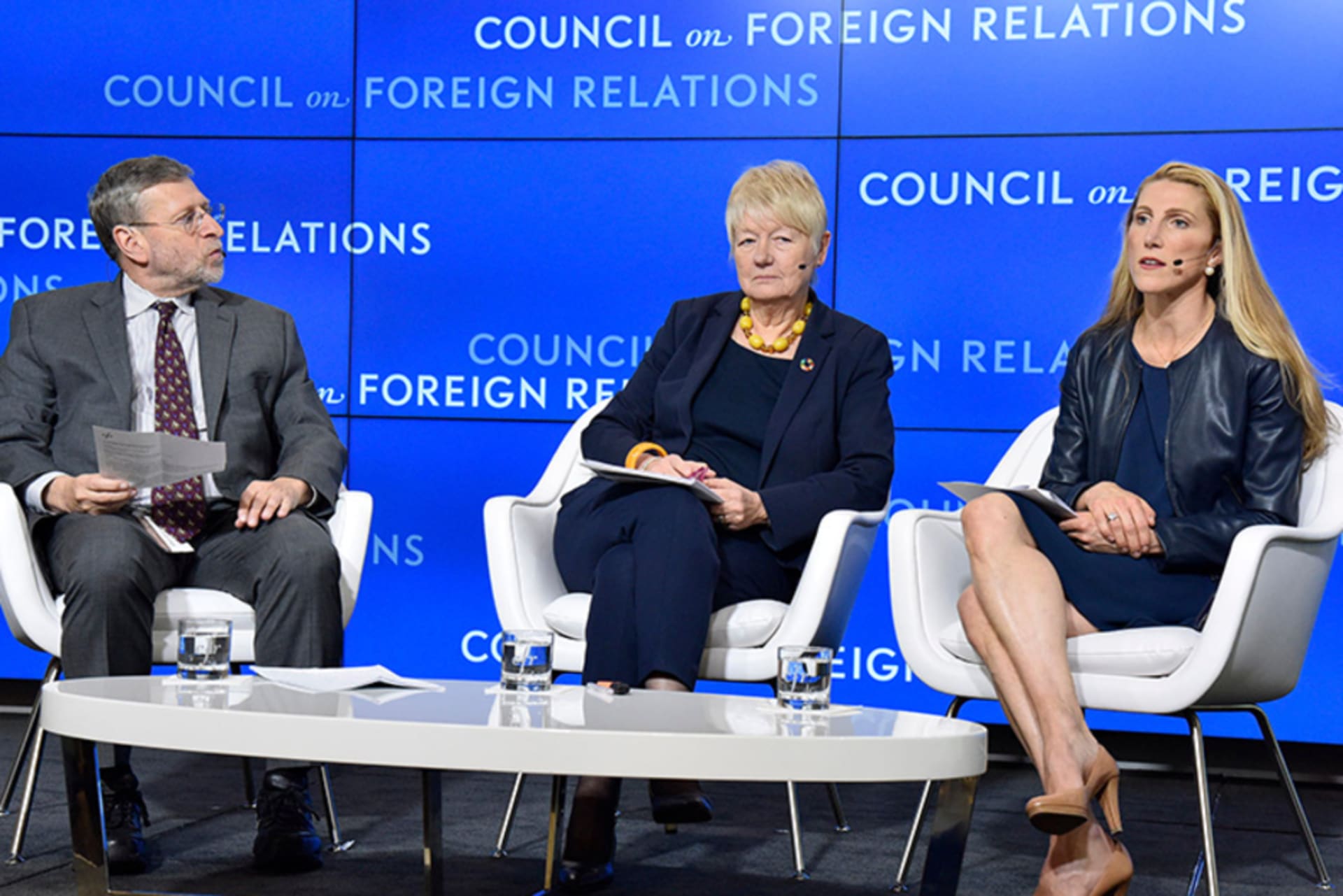
Event date
From Global Health Program.
Session I: Trade, Agriculture, and Antimicrobial Resistance
Speakers
- Aik Hoe LimDirector, Trade and Environment, World Trade Organization
- Anthony D. SoProfessor of the Practice, and Founding Director, IDEA Initiative, Johns Hopkins Bloomberg School of Public Health
- Kathy TalkingtonDirector, Antibiotic Resistance Project, Pew Charitable Trusts
Presider
- Thomas J. BollykyDirector, Global Health Program, and Senior Fellow for Global Health, Economics, and Development, Council on Foreign Relations;Author, Plagues and the Paradox of Progress: Why the World Is Getting Healthier in Worrisome Ways; @TomBollyky
Transcript
BOLLYKY: Good morning, everyone. Thanks so much for coming. I’m Tom Bollyky. I’m the director of the Global Health Program here at the Council on Foreign Relations.
It is my great pleasure to welcome you to our first Symposium on Health and International Economics entitled Is Globalization Still Good for You? Twenty years ago from this year, large and violent protests filled the streets outside of leaders’ meetings of the World Trade Organization, the World Bank, the International Monetary Fund, and the G7 meetings of the world’s richest countries.
There was a fierce debate as to whether or not global and economic and social integration served to benefit only the rich and powerful or whether it also advanced the interests of the poor and underprivileged. These concerns were accompanied by or spurred, rather, by a dramatic increase in the global trade in goods and services and increases in the volumes of capital flows. And also there was an HIV epidemic that exposed the global inequities around access to medicines.
Twenty years later, concerns in globalization and health are on the rise, not quite reaching the level of the protests that we saw in 1999, but disrupting global health partnerships and...
Session II: Trade and Health in the Era of Noncommunicable Diseases
Speakers
- Sally Grooms CowalSenior Vice President, Global Cancer Control, American Cancer Society
- Jimmy KolkerFormer Assistant Secretary for Global Affairs, U.S. Department of Health and Human Services
Presider
- John MonahanSenior Advisor for Global Health and Senior Fellow at the McCourt School of Public Policy, Georgetown University
Transcript
MONAHAN: I’m John Monahan. I’m a senior fellow at Georgetown University and I’ll be presiding over this session today.
And we have—this should be a really interesting discussion. We have two terrific speakers, who I’ll introduce in just a second. But just to get us started, just—and I know most everybody in the room here is quite expert in global healthy, but just a—just a couple sort of definitional and background points to get us set, mostly about what we’re talking about, which is noncommunicable diseases, trade, the private sector, their interrelationship.
Just as a matter of definition, NCDs, noncommunicable diseases, are noninfectious, nontransmissible diseases, such as cardiovascular disease, cancer, chronic respiratory illnesses, diabetes. NCDs are really important. They are the leading causes of global death and mortality, killing three out of five in the world today and are basically responsible for the bulk of the global burden of disease.
And while the incidence and prevalence of NCDs are pretty common in the high-income world, as we know, because of life here in the United States and our challenges with obesity and similar diseases, the burden of NCDs is rapidly growing in low and middle-income countries. In fact, it’s growing...
Keynote Session: Is Globalization Still Good for Your Health?
Speakers
- David DollarSenior Fellow, John L. Thornton China Center, Brookings Institution
- Ilona KickbuschDirector, Global Health Centre, The Graduate Institute Geneva
Presider
- Vanessa B. KerryCofounder and Chief Executive Officer, Seed Global Health
Transcript
KERRY: Good morning, everyone. How are you? It’s nice to see you all. So this is your session: “Is Globalization Still Good For Health?” I’m Dr. Vanessa Kerry. I’m the co-founder and CEO of Seed Global Health and on faculty at Harvard Medical School.
And I’m very, very delighted to be joined here today by Ilona Kickbusch who is, as you know—you all have their bios, so I promised I’d keep that to a sentence. But she is the director of the Global Health Centre at the Graduate Institute of International Development Studies in Geneva. And David Dollar, who is a Brookings Institution Senior fellow and the host of the podcast Dollars and Sense.
So just some quick notes on this morning. We’re going to spend about half an hour asking some questions of our panelists, or I’ll be asking some questions of our panelists, and letting them really share a number of, I think, their extraordinary reflections, research and experience on what they’ve learned. And then at 12:15 I’m going to invite the members to be able to join the conversation and ask some questions directly. Please remember that this meeting is on the record. We will cover that...